Showing posts with label florida. Show all posts

Tuesday, January 17, 2017

Recommendations to select the right Boat


As many prospective buyers struggle with the buying decision of a boat, and it’s a difficult decision to take, lest explore the four basic hull shapes that embody the vessels in today’s trawler community. 

HULL SHAPES

Planing Hulls are relatively new to our cruising fleet, yet they offer benefits that make them ideal choices for some people. These hulls ride on top of the water beyond hull speed, offering high speed and performance that is relatively efficient. The planing hull is a great choice for those with limited time for cruising. In fact, many dealers find new buyers are able to make extended cruises in short order, getting to the cruising grounds quickly and then slowing down to smell the roses.

The planing hull is also not very comfortable or easily handled in rough weather; the boat must be slowed down and often becomes squirrelly as a result. And the somewhat limited storage and tank capacities tend to keep things simple. 

Another hull shape to consider is the Semi–displacement Hull Form. It has a shape flat sections behind and a bow that lifts for higher speed, allowing operation over a wide range of performance. This hull is efficient at displacement speeds, yet it offers a higher speed potential if desired. The semi–displacement hull is a good compromise of hull features, offering good storage and sufficient tankage for extended cruising and a proven record as a liveaboard cruiser. The disadvantages of the semi–displacement hull is that it is not as stable in rough seas as a true displacement boat, and handling can also be difficult in following seas (the generally flat severe is a big target for waves coming from behind).

The Full displacement Hull Shape travels through the water and is by far the most traditionally seaworthy shape for a cruising powerboat. It is most comfortable at sea and at anchor, has good fuel economy, and goes the distance with long range. Its superior storage and fuel and water tankage allows for great living aboard and extended cruising, especially when there is no schedule to follow. Its disadvantages are that it is the slowest hull shape, often along the order of 7—8 knots. The seaworthy shape is disposed to rolling in a seaway, so some form of stabilization is usually fitted for crew comfort. The full displacement hull also has the deepest draft, although most builders try to keep this from being excessive to allow cruising in paradise grounds lacking deep water.  

The Power Catamaran is the latest hull shape to come into our market, and it’s unusual enough to warrant its own category. Displacement cats have a wide performance envelope, often using a small diesel engine in each hull to reach respectable cruising speed with good fuel economy. Power cats have generally shallow draft and offer form stability due to the wide footprint of widely spaced hulls. However, unlike their sailing complements, there is no sail rig to contend with and they are not as beamy, so you don’t face the dockage issues that you do with a sailing cat. The downside of a catamaran is its inability to carry much weight, as all aspects of its performance suffer when the boat is loaded too heavily. These craft work best when they are kept light, and only the larger power cats can handle the full–time live aboard accommodations and storage that many couples require.

Another key issue for many people is deciding what kind of style you embrace. Do you wait for perfect weather, or do you go no matter what? Will you anchor out most of the time or stay at a marina? Do you tend to move around or stay in one place during a cruise? Knowing your style will help refine your comfort levels and dictate what kind of boat might work best. Subtle design elements will support one style over another, so it helps to know your style before discussing a particular boat with a dealer.

Along with layout choices, another area that is almost more crucial for happy cruising than the boat itself is a careful review of the boat’s systems and their accessibility. I always recommend reviewing major systems for single points of failure—points where, if they fail, the system no longer works. A surveyor can often assist with this evaluation, but only if he or she is charged with this specific task.

But the most important thing I offer is that you can go cruising on any boat. Just think it through, find a boat that fits your needs, and go cruising. The worst thing you can do is rob yourself of the joys of cruising while dreaming of an adventure never to happen, on a boat that is out of reach. Just do it!

Whiticar Yacht Sales is the brokerage division of Whiticar Boat Works, Inc. which has an established 50 year plus reputation for pedigree custom sportfishing boats, quality boat repairs, and expert marine service. You can contact our office (772) 219-3425

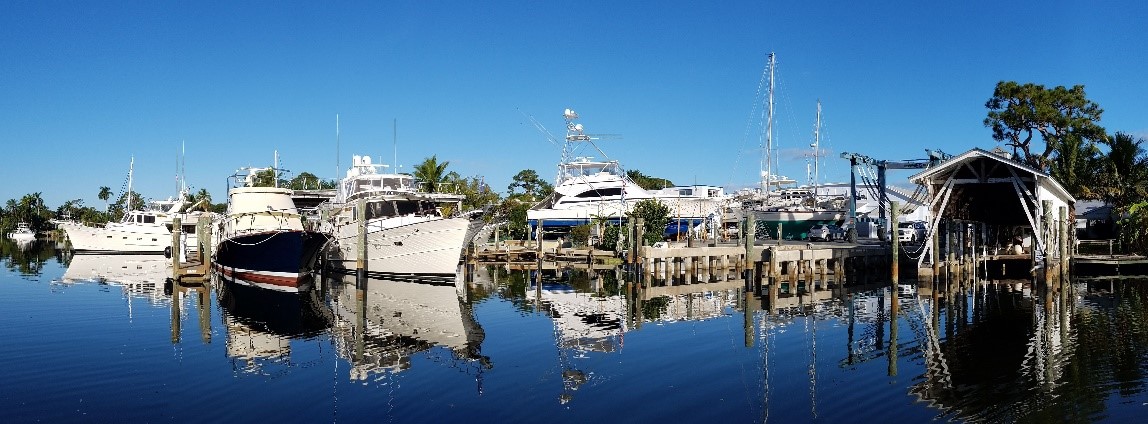
Whiticar Boat Yard for all of your boat repair, maintenance and yachting needs. Stop by. See for yourself what Stuart, FL and Whiticar Boat Yard can do for you.  We are located on Willoughby Creek in Martin County, Florida, just two miles east of the St. Lucie Inlet, Or call our office (772) 287-2883. You can also visit our website http://www.whiticar.com/wp/about-our-crew/  Yacht Sales Department, we are always ready to assist you!  


Tuesday, September 27, 2016

Advantages of Manual Marine Navigation Tools


Modern electronic marine navigation tools are easy to use and accurate but it is easy to become dependent on them however is important to learn how to use the manual tools as the electronic marine navigation tools may not be 100 % reliable.

All modern marine navigation tools depend on electricity, and are susceptible to shorting of current by seawater or lightning strikes. Even with the elaborate backup systems and rigorous insulation, there is a risk of water shorting out the electrical system. To prevent all the issues that, you can address while on board we recommended to learn how to use manual tools like chart, magnetic compass, pencil, rulers among other as there is little that affects their functionality.

Recognizing those tools will help you to be become a skilled human navigator able to sail professionally even though the marine navigation equipment on board fail. 

Manual Tools to Navigate 


Chart Table


A secure place to work on navigation is to have a permanent [ chart table] with a horizontal surface large enough for a chart to be laid out at one fold. A chart table should either have a lifting top with chart storage space underneath, or a drawer allowing the charts to be stored flat.

Some navigators prefer to stand at a chart table arranged fore and aft, but commonly chart tables are place athwartships with a seat. Shelf space for reference books and bulkhead for marine navigation instruments and communication equipment. a small compass mounted so that the navigator can keep an eye on course.

A flexible stalk-light is ideal for lighting the chart and allows the navigator to work on charts without disturbing sleeping crew or affecting the helmsman's night vision fitting it with a low-power red bulb which minimizes loss of night vision should be considered.

Parallel Rulers


The parallel ruler is used by the navigator to transfer a bearing from the chart's compass rose to the section of the chart which is being worked on. Depending on the design, the ruler is rolled or "walked" across the chart to the selected area where the replicated bearing is drawn indicating the course or the bearing of an object. choosing a parallel ruler, try out a range of both roller and walking designs at sea.


Log - LogBook


The elements of dead-reckoning are course and distance; the compass tells you the course steered, and a 'log' measures distance sailed. The common type of log is an electronic instrument that shows speed and distance run, much like the speedometer and milometer in a car.

For recording position, course, distance run, and other crucial information, a logbook is used. There is a requirement to keep one by maritime law, because it in the event of an incident at sea, it may have to be produced. Record key data at half-hourly or hourly when close to shore and less often when offshore. 


Plotters

A plotter achieves the same result as a parallel ruler and easier to use on a small boat. Plotters are used in conjunction with the latitude and longitude grid lines marked on the chart, rather than using the compass rose.
Dividers

Dividers are usually made of brass with steel tips and used to measure distances on the chart. Purchase a pair of dividers at least 15cm (6in) long as this gives a useful span. The [single-handed typ] with the bowed top is more manageable than the straight type, which requires two hands to open and close it.


Nautical Publications


Nautical Almanac - The principal reference book is a current copy of the nautical almanac covering the sailing area which provides tidal information, harbor plans and details.

Pencils - The use of soft pencils, such as 2B, on charts prevents permanently marking them. Hexagonal pencils resist rolling off the table when the boat heels. Along with the pencils, is a requirement for a pencil sharpener and a soft eraser.
Boat Compasses

A compass is the primary navigation tool on board a yacht and is the means of identifying direction, enabling a course to be steered and to plot a chart position by the means of bearings of navigational marks and shore objects. Choose from a variety: conventional compass, fluxgate Boat compass, steering boat compass, hand bearing compass.


Get Ready for your Boat Trip

Pilot Books -Tidal Atlas - Instruction Manuals - Lights and Radio Signals – Marine Binoculars among others, Shearwater Marine Supplying you 4519 SE Commerce Ave. Stuart, FL 34997, Contact us (772) 781-5553 or reach out us at: adolf@whiticar.com


Wednesday, January 13, 2016

Safety Equipment Required for Class “A” Recreational Vessels


The Florida Fish and Wildlife Conservation Commission communicates boating regulations in the state. This applies to vessels lesser than 16 ft. long, Canoes and Kayaks:


Carry personal flotation devices (PFDs):

The boat must have an approved Type I, II or III for each person on board or being towed on water skies etc. The flotation device Must be USCG-approved, in serviceable condition, and properly stored.

NOTE: A Type V hybrid may substitute for any Type I, II, or III device, but must be worn whenever the vessel is underway and the person is not in the cabin or other enclosed area.
When navigating in a vessel class A every person on board under the age of 6 must wear an approved Type I, II, or III while the vessel is underway.

If you have a personal watercraft (PWC) everyone on or operating it must wear an approved Type I, II, III or V PFD. The inflatable PFDs are prohibited.

Also, every person skiing or aquaplaning must wear an approved Type I, II or III PFD. Inflatable PFDs are prohibited.


Fire Extinguishers:

Make sure your fire extinguishers are USCG-approved - Must be in serviceable condition. An USCG-approved B-1 type fire extinguisher is required for all recreational motorboats except outboard-powered motorboats less than 26 feet long if constructed in a manner that will not allow gas fumes to accumulate.

If your boat has a built-in fuel tank, an inboard engine, compartments where portable fuel tanks may be stored, or open areas between the hull and deck where flammable or explosive gases could accumulate, you must carry a fire extinguisher. Non-motorized boats are exempt from the fire extinguisher requirements.

NOTE: When an approved fixed fire extinguishing system is installed in the machinery space(s), it may be counted in the place of one B-I type hand-held portable fire extinguisher. Some fire extinguishers require specific mounting brackets for approval. Read the label on your fire extinguisher for this information.


Visual Distress Signal:

It is required on the high sea and coastal waters only, and it has to be carried for nighttime use.

NOTE: Coastal waters means the Atlantic Ocean, Gulf of Mexico and all bays, sounds, harbors, rivers, inlets, etc. where any entrance is over 2 miles wide to the first point where the distance between shorelines narrows to 2 miles.


Sound-producing Device:

It could be a bell, horn, whistle etc. The regulation rule says that every vessel less than 12 meters (39.4 ft.) in length must carry an efficient sound-producing device. They don’t have any particular specifications; the vessel just needs to produce signals required by the navigational rules.


Backfire Flame Control:

There is a need to control backfire flame of all gasoline engines installed after April 25, 1940, except outboard motors. These backfire flame arrestors must be USCG approved.


Ventilation:

For boats built prior to Aug. 1, 1980 you must have at least two ventilator ducts fitted with cowls or their equivalent to ventilate the bilges of every closed engine and fuel-tank compartment on boats constructed or decked over after April 25, 1940, using gasoline as fuel or other fuels having a flash point of 110 degrees or less.

For boats built after Aug. 1, 1980 you must have at least two ventilator ducts for the purpose of efficiently ventilating every closed compartment that contains a gasoline engine and every closed compartment containing a gasoline tank, except for those having permanently installed tanks which vent outside the boat and contain no unprotected electrical devices. Also, engine compartments containing a gasoline engine having a cranking motor must contain power operated exhaust blowers which can be controlled from the instrument panel.


Vessel Lighting:

If you own a recreational vessel, remember that is required to display navigation lights between sunset and sunrise and during periods of reduced visibility (fog, rain, haze, etc). The U.S. Coast Guard Navigation Rules specify lighting requirements for every description of watercraft.