Monday, February 13, 2017

Is Pod Propulsion the future for boats?

At the 2005 Miami Boat Show Volvo Penta introduced its Inboard Performance System (IPS) and changed forever not only the way we run our boats but the way we think about running them.
Before, guiding required planning, logic, coordination, and strategizing; after, it became simple intuition: Look where you want to go and point the direction control that way. They said it was so easy a child could do it, and sure enough, it wasn’t long before a man just out of kindergarten skillfully manipulated a 40-footer into a slip all by himself.


IPS also claimed more speed and better fuel efficiency (the precise amount of each is still up for discussion), and thanks to its behind engine placement, more interior space, and lower interior sound levels. Still, many boaters weren’t convinced. One described his skepticism stating the following: “It’s just too good to be true...!- There’s must be a hidden cost that no one has factored in.”

The Unidentified


Over the years, I’ve found online forums to be some of the most common places for first-hand accounts of engine-related problems. Certain, the stories are one-sided, but as an total source of information, can be concluded that pods are no more disposed to letdown than inboards but that when a pod breaks, the repair bill’s going to be higher.

Everyone fears the unknown, especially boaters, many of whom still consider pod drives something strange. Hang around a boatyard, and you’ll hear at least one horror story about some unfortunate soul who was stuck, because his pods failed. These are often second- or third-told tales with a questionable attribution and few verifiable facts.

Pods are comprised of some very costly components, but theoretically, their modular design should yield some countervailing savings in labor costs. 

Difficulty


Conventional wisdom seems no longer applies. Today electronics are intimately entwined with every aspect of our lives, and whether it’s commercial jet engines, cars, home appliances, or chart plotters, we expect and receive virtually bulletproof reliability.

So, the fact that pod systems are full with electronics actually makes them less likely to failure—and unfortunately a deep mystery to most mechanics. Unhappily, the fact that electronics don’t respond well to basic force may mean some service challenges, at least in the short term, which is why long-distance cruisers have, as a group, been cautious of pods.

Pods have more parts, both mechanical and electronic, and conventional wisdom says that means more problems. The inboard has simplicity and ubiquity. Pull into any port in the world, and there’s probably a guy there who can fix it. 

Upkeep


To keep Inboards, require sacrificial-anode replacement, prop adjustment, cutless bearing repair, shaft alignment, and a method of controlling marine growth. Pods require drive-oil changes every 250 hours or annually. Also, demanding periodic attention are hydraulic steering, transmission, and lower-unit oils. Everything told, figure $500 per engine annually, plus haul-out fees.

Most pods also require periodic removal and inspection of prop sets and seals, and re-greasing of the prop-shafts - figure $250 per pod.

All up, pod owners can expect to pony up something like an additional $2,500 for scheduled maintenance. That’s not mark change! and while it’s hard to nail down the amount of that fuel-efficiency edge, everyone agrees it does exist and can compensate you for at least some of the additional maintenance costs. Either if you’re a do-it-yourself, you’ll discover that a lot of pod maintenance requires specialized tools and training. 

Inertia


Like long-distance cruisers, sport fisher-men have been slow to accept pods, in this case not because of supposed deficiencies but rather an unwillingness to try anything that might reduce chances of success. Better fuel efficiency? More interior room? If they don’t increase the odds of hooking up, who cares? And maneuverability—well, any good sport-fishing captain can put his ride wherever he wants—without a control.

Initial Fee


The true of all is that Pods cost more, But how do you compare boats? Imagine a 44-footer with three cabins, two heads, and inboards priced $20,000 less than an identical 44-footer with pods that, thanks to its aft-engine placement, has one more cabin or head. Wouldn’t accommodations be the more relevant measure? And what of resale? How much of the additional initial cost will you get back at trade-in time? We’re still trying to sort through the answer to that one.

There are many reasons why everyone’s not on the pod movement. But tick them off and it’s hard not to conclude that the trend is undeniable: More boaters prefer them every year, and while they’ll never completely replace inboards, they are the future of boating. As one broker comments, “It’s like automatic transmissions. At first no one trusted them; now you can hardly sell a car without one.”

*While traditional shaft drives are oriented out Ans away from the vessel, IPS drives feature forward facing props.


If you have any questions regarding your boat or need maintenance or repairs, we recommend Whiticar Boat Works! leader and premier service provider in the marine industry. It is a well-known and reputable company located in South Florida. It was founded in 1949 by Curtis ´Curt´ Whiticar. Whiticar Boat Works is a family owned & operated company. They have multiple locations in South Florida. For more information about us check out the website  http://www.whiticar.com/wp/   or call us (772) 287-2883
References:

Thiel, R. (2016, 02 13). The Truth About Shafts and Pods. Retrieved from Power and Motor Yacht: http://www.powerandmotoryacht.com/boats/truth-about-shafts-and-pods


Tuesday, January 17, 2017

Recommendations to select the right Boat


As many prospective buyers struggle with the buying decision of a boat, and it’s a difficult decision to take, lest explore the four basic hull shapes that embody the vessels in today’s trawler community. 

HULL SHAPES

Planing Hulls are relatively new to our cruising fleet, yet they offer benefits that make them ideal choices for some people. These hulls ride on top of the water beyond hull speed, offering high speed and performance that is relatively efficient. The planing hull is a great choice for those with limited time for cruising. In fact, many dealers find new buyers are able to make extended cruises in short order, getting to the cruising grounds quickly and then slowing down to smell the roses.

The planing hull is also not very comfortable or easily handled in rough weather; the boat must be slowed down and often becomes squirrelly as a result. And the somewhat limited storage and tank capacities tend to keep things simple. 

Another hull shape to consider is the Semi–displacement Hull Form. It has a shape flat sections behind and a bow that lifts for higher speed, allowing operation over a wide range of performance. This hull is efficient at displacement speeds, yet it offers a higher speed potential if desired. The semi–displacement hull is a good compromise of hull features, offering good storage and sufficient tankage for extended cruising and a proven record as a liveaboard cruiser. The disadvantages of the semi–displacement hull is that it is not as stable in rough seas as a true displacement boat, and handling can also be difficult in following seas (the generally flat severe is a big target for waves coming from behind).

The Full displacement Hull Shape travels through the water and is by far the most traditionally seaworthy shape for a cruising powerboat. It is most comfortable at sea and at anchor, has good fuel economy, and goes the distance with long range. Its superior storage and fuel and water tankage allows for great living aboard and extended cruising, especially when there is no schedule to follow. Its disadvantages are that it is the slowest hull shape, often along the order of 7—8 knots. The seaworthy shape is disposed to rolling in a seaway, so some form of stabilization is usually fitted for crew comfort. The full displacement hull also has the deepest draft, although most builders try to keep this from being excessive to allow cruising in paradise grounds lacking deep water.  

The Power Catamaran is the latest hull shape to come into our market, and it’s unusual enough to warrant its own category. Displacement cats have a wide performance envelope, often using a small diesel engine in each hull to reach respectable cruising speed with good fuel economy. Power cats have generally shallow draft and offer form stability due to the wide footprint of widely spaced hulls. However, unlike their sailing complements, there is no sail rig to contend with and they are not as beamy, so you don’t face the dockage issues that you do with a sailing cat. The downside of a catamaran is its inability to carry much weight, as all aspects of its performance suffer when the boat is loaded too heavily. These craft work best when they are kept light, and only the larger power cats can handle the full–time live aboard accommodations and storage that many couples require.

Another key issue for many people is deciding what kind of style you embrace. Do you wait for perfect weather, or do you go no matter what? Will you anchor out most of the time or stay at a marina? Do you tend to move around or stay in one place during a cruise? Knowing your style will help refine your comfort levels and dictate what kind of boat might work best. Subtle design elements will support one style over another, so it helps to know your style before discussing a particular boat with a dealer.

Along with layout choices, another area that is almost more crucial for happy cruising than the boat itself is a careful review of the boat’s systems and their accessibility. I always recommend reviewing major systems for single points of failure—points where, if they fail, the system no longer works. A surveyor can often assist with this evaluation, but only if he or she is charged with this specific task.

But the most important thing I offer is that you can go cruising on any boat. Just think it through, find a boat that fits your needs, and go cruising. The worst thing you can do is rob yourself of the joys of cruising while dreaming of an adventure never to happen, on a boat that is out of reach. Just do it!

Whiticar Yacht Sales is the brokerage division of Whiticar Boat Works, Inc. which has an established 50 year plus reputation for pedigree custom sportfishing boats, quality boat repairs, and expert marine service. You can contact our office (772) 219-3425

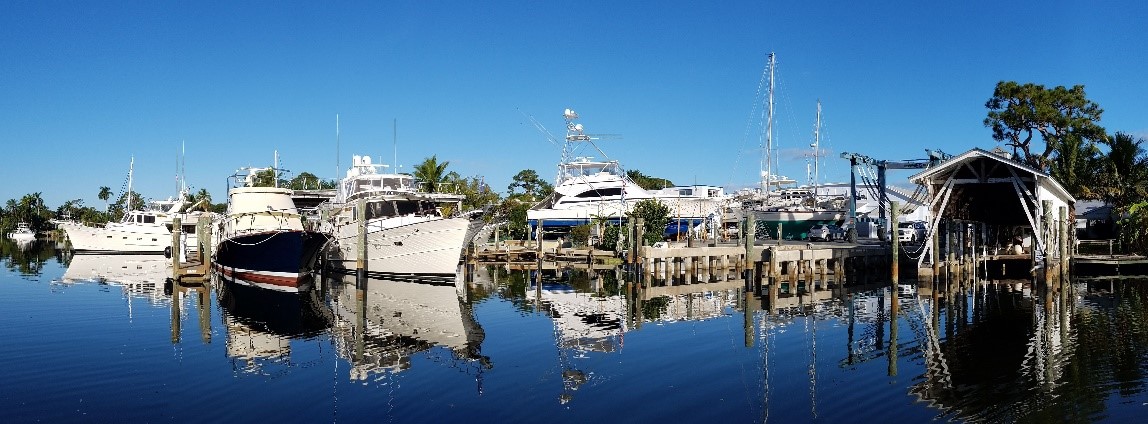
Whiticar Boat Yard for all of your boat repair, maintenance and yachting needs. Stop by. See for yourself what Stuart, FL and Whiticar Boat Yard can do for you.  We are located on Willoughby Creek in Martin County, Florida, just two miles east of the St. Lucie Inlet, Or call our office (772) 287-2883. You can also visit our website http://www.whiticar.com/wp/about-our-crew/  Yacht Sales Department, we are always ready to assist you!  


Thursday, December 15, 2016

FISHING REPORT FROM THE SHORE AT THE TREASURE COAST FLORIDA


As the weather gets colder, the fishing gets hotter! Following the reviews about fishing Inshore / Nearshore on the Treasure Coast, its seems to experience a lot of changes for fishing. 

The snook have moved back up river where they stay for the winter in more salty water. They can be caught fishing bottom baits along the bridges and deep channels. Lots of big snook are caught using First Light Jigs. The technique for using these 1-to-2-ounce jigs involves casting up-current and retrieving down-current at a speed that keeps your jig very close to the bottom. These snook will sit belly-down on the bottom where the water is usually warmer during the colder months.
The snook will usually be close to the bridge supports to get out of the current. We also find snook sitting along seawalls that face the sun in the morning back in the St. Lucie River. For those snook, we use top water traps and flies to simply cast close parallel and pop down the wall.
Snook season will soon end but you still have time to catch some big ones and possibly a keeper or two. When it rains, the locks must open and this is the place to be when they are opened. You can catch over 30 snook a trip. Just being there at the right time is all the battle.
The pompano has started showing up along the beaches for surf-casting using 9-to-12-foot rods. For attraction, we use sand fleas, clam’s meat, shrimp, and flavored fish-bites artificial bait strips.
Incoming waves is much preferred with fishing from the beach for pompano. The pompano will also come inshore and school up on the flats. Inshore, we use jigs, sand fleas, and shrimp.
Pompano guys, if the wind stays strong like it has been, look to the river and bridges. Jigs will be your best bet. Jensen Beach and Little Jim bridge are hot spots. You can’t miss where it is because everyone will be lined up jigging. Look for Walton Rocks Beach to be the very best place if the wind lays down. River and wading will be hot for trout and red fish. You also can’t beat the places north of the power lines. Shrimp under a popping cork is the way to go but top water and plugs will work great.
The Spanish mackerel are also showing up along the beaches and the well-known Peck Lake Reef where hundreds of anglers and commercial fishermen can be found throwing jigs and gotcha lures. It’s a great type of fishing for family members and inexperienced anglers to easily get hooked up!

When fishing from the coast, the fish hang out there when the water is flowing to eat all the little baits that come over it. Look for pools of calm areas. I use plugs that look like mullet to get best results. Swim attractions like storms work well, but if water is running hard, it is better to use plastic to get the bite.

Bridge fishing will be good, but you must get deep to get where they are feeding. Skill Hawks will help here. Waterfronts will also hold some snook.
Bluefish have moved in and the best place to get these guys is Hobe Sound Public Beach on cut bait like mullet and spoon lures. Tie a 50-pound mono leader on and then hold on. There will be plenty of sharks in the area, so get the blues in quick.
December is here and it’s not just the holidays that we have to look forward to. With every cold front this month, a new body of fish should push down the beach in search of warmer water and a constant food source. Blackfin tuna, sailfish, dolphin and everything else will migrate south along our reef systems and current edges.

Focus around faint temperature breaks and color changes with both dead or live bait for success. That being said, this is my favorite time of year to troll.


Naked ballyhoo rigged on 6/0 mustad circle hooks are my bait of choice and I definitely like to have a squid chain out there as well. A lighter set of poles will increase your hook up ratio, which is key to a successful day of catching. Blackfin Rods makes an off the chain sailfish rod that is great for both trolling and live baiting.

When weather permits, this is also a great time of year to go swordfishing. Over the last 10 years, daytime swordfishing has become extremely popular and the Treasure Coast offers great opportunities at catching these gladiators. Fishing dead baits a quarter-mile below the surface can provide one of the most exciting days of fishing you’ve ever had when it all comes together.

These fish are sometimes more than 500 pounds and will test every aspect of your fishing game. Whatever it is you decide to do this winter, I hope your trip is off the chain. Enjoy this time for fishing and spoil yourself with stuffed salty presents in the form of the many offshore species of fish that inhabit the coastal waters of Martin County. Local anglers will be able to enjoy the seasonal excitement of being able to intersect and catch an all-star lineup of offshore game fish like sailfish, dolphin, king, spanish mackerel, grouper, and snapper. Florida`s winter weather will be in full swing this month, hosting the typical procession of cold fronts that will pass over our peninsula with fresh breezes.

These fronts and the winds associated with them, will directly determine offshore conditions and force anglers to plan their ocean fishing trips around daily weather forecasts and the sea states they encounter. While there will be many rough ocean days this month, there will also be many favorable weather windows for fishing in between the arrival of cold fronts.

Locating bottom structure to employ one’s fishing strategies upon, will be the key component to catching success during the month of December. Trolling, drifting, and anchoring strategies for deploying baits is always enhanced when doing so around and over top of some bottom (reef structures). Grouper will be at the top of the holiday fish wish list, as December will be the last month of an open catch and keep season that will close at midnight, December 31.

Lane, mangrove, and mutton snapper will also be high on the wish list and will be found in good numbers from 50 to 90 feet of water, especially around artificial reefs just east and northeast of our St. Lucie Inlet. So, in December, make your fish wishes come true by fishing around “bottom” and post up on one of the many “honey holes” that make up the reef system, offshore of Stuart.

Whether by land, air or sea, you can reach Whiticar Boat Yard for all of your boat repair, maintenance and yachting needs. Stop by. See for yourself what Stuart, FL and Whiticar Boat Yard can do for you.  

We are conveniently located from I-95, only one-half mile from Witham Field Airport, and just west of the Intercoastal Waterway at marker 13A


 Wishing you Happy holidays from all our team!


Wednesday, November 23, 2016

Top Recommended Places For Boating and Leisure Activities on The Treasure Coast - Florida

The Treasure Coast is considered a boater's paradise as the area offers fantastic opportunities to spend time with family and friends while you enjoy sailing on your yacht. If you want to dock up for drinks, dinner and a vibrant nightlife you will like to drop anchor in the great Florida Treasure Coast.


1. Peck's Lake – Stuart, Florida 


It is located right off the Intracoastal Waterway in Stuart, Florida. Part of the charm of this location is its privacy, there are no facilities, so make sure to pack everything you'll need to comfortably spend time on the virgin white sand beach, it is a passive destination for a seaside retreat where boats of all sizes can anchor up. For more fun activities, you can bring your paddle boards, kayak, and fishing rods. 

If you are making a day trip to Peck's Lake from the south, you'll have a stunning ride up. The manatee zone between Hobe Sound and Peck Lake will slow you down and it will give you more time to enjoy the beautiful scenery. 


2. Pirate's Cove Resort and Marina - Port Salerno, Florida


This energetic waterfront resort is located in the Manatee Pocket, it’s the perfect place to dock up and have a little fun in the sun. After you get off your vessel, most people  head to the waterfront Tiki Pirate Bar. There you can kick back, have some food and drinks in a casual beach setting, enjoy live music, enjoy drink specials and some others activities. Whether you are spending some time with the whole family or in a romantic date, take in the beautiful waterfront views of the Manatee Pocket.


3. Historic Downtown Stuart – Stuart, Florida


Sunset Bay Marina and Anchorage is an exceptional spot to dock your boat for the day or evening in Stuart. The large marina has 198 slips, many of which can accommodate yachts up to 150 feet in length. Once you dock, you can take advantage of the marina club house which offers customers a range of services and amenities. Docking your vessel at Sunset Bay Marina will give you an easy access to Historic Downtown Stuart, a charming portion of Stuart that exhibits a laid- back old-Florida atmosphere which it is completely pedestrian-friendly.

The Atlantic Coast city of Stuart was recently voted as the number #1 “happiest shore town” by Coastal Living Magazine. That ranking should be enough motivation for you and your family to cruise through Stuart, Fl. for a joyful visit. 


4. Manatee Pocket - Port Salerno, Florida


If you're a boater looking for the ultimate bar-hopping opportunity, you will find it at Manatee Pocket - Port Salerno, Florida. On its beautiful protected waters, you'll find a sweet set up of three enthusiastically popular, ideally located dockside restaurants. Whether you visit, during the day for lunch or at night for a little extra fun, these establishments in the Manatee Pocket area are sure to deliver a good time.


5. Fort Pierce City Marina and Main Street – Fort Pierce, Florida


The floating docks at Fort Pierce City Marina have wet slips that can accommodate vessels up to 160 feet depending on draft. In the more northern region of the Treasure Coast off, at the Indian River Lagoon is the historic seaside town of Fort Pierce, another ideal location for a yachting day trip.

Once you’ve secured your ship, the opportunities for enjoying your day here are endless. A variety of markets, restaurants, shops, boutique, live music, and beautiful colonial Spanish architecture await you as you make your way into town. Fort Pierce's Main Street was voted as one of the 50 Best Small Towns by Top Value Reviews as it has so much to offer. 


6. St. Lucie Inlet Preserve State Park – Port Salerno, Florida


On the Atlantic Intracoastal Waterway side, there is a dock with many available slips to dock boats up to 32 feet in length. A boardwalk will take you across forests of mangroves and hammocks of live oaks to a nicely preserved quite Atlantic beach. Just at 2.7 miles away you can find a white sandy beach available to you while you enjoy your day trip or weekend getaway. 

One of the few remaining undeveloped barrier islands on Florida’s east coast, the St. Lucie Bay Preserve State Park, is accessible only by boat and totally worth the ride. Visitors come here to swim, sunbathe, kayak, surf fish, or picnic at the beach tower. Snorkeling and scuba diving are also popular activities at this state park. 

Important fact: There is a lot of shallow water in this area. Be sure to head out of channel right by the big dock sign that reads "St. Lucie Inlet Preserve Park."


While you are boating through any of these beautiful places, remember the importance of having Whiticar Boat Works phone number handy, in case you need assistance or service for your boat.

Whiticar (Stuart) 772-287-2883
• Whiticar (Fort Pierce) 772-460-0660
• Shearwater Marine & Industrial 772-781-5553

Whiticar technicians have extensive knowledge and training to assist you with any of your boating needs.

Whiticar has 2 full service boat yards and they also offer the following Mobile Services:
• Main Engine and Generator Service
• Marine Electrical
• Air Conditioning and Refrigeration
• Plumbing Systems/Pumps and Strainers
• Hydraulic and Steering
• Stabilizers
• Electronics
 Carpentry Services

Thursday, October 20, 2016

Boating Lifestyle at Fort Pierce


Thinking about fishing and boating at Fort Pierce? There are many reasons why Fort Pierce, located on the central east coast of Florida, is considered to be one of the best fishing and boater friendly spots in the country. 

Fort Pierce offers one of the safest bays on the east coast and compared to other bays, Fort Pierce’s is one of the most beautiful and uncrowded. The scene entering and leaving the inlet isn’t chaotic with high-rise buildings and cruise ship traffic it’s a tranquil and tropical experience that will set the tone for your boating or fishing trip.

The inshore fishing opportunities are just as plentiful. Fort Pierce has a natural lagoon/waterway called the Indian River Lagoon – the most diverse estuary in North America, home to more than 4,000 species of plants and animals. The Indian River Lagoon is well known for producing large trout. In fact, the world record spotted sea trout – listing the scales at over 17 pounds – was hooked here.

The lagoon also offers anglers year around activity, with an enormous array of fish to catch. Snapper, tarpon, trout, jack, snook, ladyfish, flounder and reds are abundant during many times of the year.


The offshore waters off of Fort Pierce are also home to a wide variety of disposed fish, providing year around action. Jack, tarpon, permit, sailfish, dolphin, wahoo, snapper, grouper, swordfish and tuna are high-pitched in these parts at various times of the year.


Fort Pierce’s great weather and multitude of boat ramps and facilities make fishing, boating and kayaking a year around activity. And the abundance of preserved natural resources and beauty make it one of the best destinations for any outdoor fan. When visiting Fort Pierce, you will also see local business that leads on the water activity culture, providing a variety of service including: Dive shops, restaurants, hotels, marinas docking facilities, bait and tackle shops, marine services, boat dealers, private charters, all located near the waterfront.


Aspects to consider before boating 

Boating is a part of life at Fort Pierce that’s why safety regulation is taken seriously and creating good boating habits when preparing for departure will ensure a fun boating day. Consider the following tips before your adventure on the water begins.
  • Complete the pre-departure checklist.
  • Make a float plan
  • Review the chart or map of the area you will be visiting 
  • Check the weather forecast
  • Check the local Tide chart 
  • Check the fuel level and always have more than you expect to use.
  • Check the boat equipment—electrical, mechanical, docking lines, life vests, first aid kit.
  • Make sure you have communications equipment onboard - VHF radio, cell phone
  • Make sure you have proper identification for everyone on board and fishing license for each angler
  • Bring plenty food and especially extra fresh water.
  • Bring extra clothing and foul weather gear
  • Always prepare a pre-departure safety meeting and show your guests the location of life vests on your container and how to use them.
  • Show them how to use the VHF radio and where your first aid kit is.
  • All children should wear a life vest and the captain should wear one if boating alone.
  • Perform a Vessel Safety check 
If you have any questions regarding your boat, need a reparation or just need an accessory/replacement/engine, we recommend to visit or call Whiticar Boat Works! We are a leader in the marine industry. We have various division in the state! For more information about us check out the website  http://whiticar.com/wp/ or call us (772) 287-2883 

WHITICAR STUART (Boat Yard) 
3636 SE Old Saint Lucie Blvd. Stuart, FL 34996
Office (772) 287-2883

SHEARWATER MARINE (Marine Shop)
4519 SE Commerce Ave. Stuart, FL 34997
Office (772) 781-5553

WHITICAR FORT PIERCE (Boat Yard)
2010 Harbor Town Drive, Suite K, Ft. Pierce, FL 34946
Office (772) 460-0660

Tuesday, September 27, 2016

Advantages of Manual Marine Navigation Tools


Modern electronic marine navigation tools are easy to use and accurate but it is easy to become dependent on them however is important to learn how to use the manual tools as the electronic marine navigation tools may not be 100 % reliable.

All modern marine navigation tools depend on electricity, and are susceptible to shorting of current by seawater or lightning strikes. Even with the elaborate backup systems and rigorous insulation, there is a risk of water shorting out the electrical system. To prevent all the issues that, you can address while on board we recommended to learn how to use manual tools like chart, magnetic compass, pencil, rulers among other as there is little that affects their functionality.

Recognizing those tools will help you to be become a skilled human navigator able to sail professionally even though the marine navigation equipment on board fail. 

Manual Tools to Navigate 


Chart Table


A secure place to work on navigation is to have a permanent [ chart table] with a horizontal surface large enough for a chart to be laid out at one fold. A chart table should either have a lifting top with chart storage space underneath, or a drawer allowing the charts to be stored flat.

Some navigators prefer to stand at a chart table arranged fore and aft, but commonly chart tables are place athwartships with a seat. Shelf space for reference books and bulkhead for marine navigation instruments and communication equipment. a small compass mounted so that the navigator can keep an eye on course.

A flexible stalk-light is ideal for lighting the chart and allows the navigator to work on charts without disturbing sleeping crew or affecting the helmsman's night vision fitting it with a low-power red bulb which minimizes loss of night vision should be considered.

Parallel Rulers


The parallel ruler is used by the navigator to transfer a bearing from the chart's compass rose to the section of the chart which is being worked on. Depending on the design, the ruler is rolled or "walked" across the chart to the selected area where the replicated bearing is drawn indicating the course or the bearing of an object. choosing a parallel ruler, try out a range of both roller and walking designs at sea.


Log - LogBook


The elements of dead-reckoning are course and distance; the compass tells you the course steered, and a 'log' measures distance sailed. The common type of log is an electronic instrument that shows speed and distance run, much like the speedometer and milometer in a car.

For recording position, course, distance run, and other crucial information, a logbook is used. There is a requirement to keep one by maritime law, because it in the event of an incident at sea, it may have to be produced. Record key data at half-hourly or hourly when close to shore and less often when offshore. 


Plotters

A plotter achieves the same result as a parallel ruler and easier to use on a small boat. Plotters are used in conjunction with the latitude and longitude grid lines marked on the chart, rather than using the compass rose.
Dividers

Dividers are usually made of brass with steel tips and used to measure distances on the chart. Purchase a pair of dividers at least 15cm (6in) long as this gives a useful span. The [single-handed typ] with the bowed top is more manageable than the straight type, which requires two hands to open and close it.


Nautical Publications


Nautical Almanac - The principal reference book is a current copy of the nautical almanac covering the sailing area which provides tidal information, harbor plans and details.

Pencils - The use of soft pencils, such as 2B, on charts prevents permanently marking them. Hexagonal pencils resist rolling off the table when the boat heels. Along with the pencils, is a requirement for a pencil sharpener and a soft eraser.
Boat Compasses

A compass is the primary navigation tool on board a yacht and is the means of identifying direction, enabling a course to be steered and to plot a chart position by the means of bearings of navigational marks and shore objects. Choose from a variety: conventional compass, fluxgate Boat compass, steering boat compass, hand bearing compass.


Get Ready for your Boat Trip

Pilot Books -Tidal Atlas - Instruction Manuals - Lights and Radio Signals – Marine Binoculars among others, Shearwater Marine Supplying you 4519 SE Commerce Ave. Stuart, FL 34997, Contact us (772) 781-5553 or reach out us at: adolf@whiticar.com


Tuesday, August 16, 2016

Prepare your Fishing Boat and Yourself for the Big Sea


Fishing is one of those activities that many people enjoy doing during the summer. Some people enjoy fishing it from the shore, and others prefer fishing from a boat. The last choice provides certain advantages as you can reach more fishing places, which usually produces better results. However, having a fishing boat requires you to have your boat in good conditions all year long, and making sure it is prepared it every time you decide to go out fishing.

Whiticar wants to share some simple instructions and suggestions that any first time charter user should consider before heading out on the fishing boat.

Whether you are, a beginning fisherman or an experienced fisherman who has all the resources available, you must take into consideration the following:

1. License your boat: Your boat is usually licensed through a state's game and fish commission or department of natural resources. This license is a sticker followed by a series of letters and numbers and must be renewed each year.


In case you are going to test other states waters, remember that most states have reciprocal arrangements where a boat licensed in one state may be used in the waters of another state by a visiting boater. Please do not forget to ask about this when you go to get your license.

2. Inspect the boat: Look for dents or cracks in your boat, especially at the bottom and around rivets. Also inspect the drain plug to make sure the drain hole still seals, and all the electronic devices work correctly.


3.Inspect and replace any necessary safety equipment: To operate a fishing boat, the law states you need to carry certain equipment to enhance your safety.
Life jackets: Most jurisdictions require a life jacket or other PFD (personal floatation device) for each passenger aboard, and for children below a certain age, they have to be wearing their PFD.
Kill switch: Many jurisdictions require a kill switch for boats with motors above a certain horsepower, so the boat can be turned off even if you have been thrown from the boat.
Fire Extinguisher: Check the laws for your jurisdiction to see what kind of extinguisher is required.  Please remember to have the fire extinguisher filled and close to the engine motor.
Signaling devices: You may need an air horn, whistle, flags, and/or flares that will alert others in case of an emergency.
Night-time running lights:  If you are planning to go out fishing at night, you should take notice and check with your jurisdiction to find out what type of light is required for the size of your boat.
GPS Plotter/Sounder


4.Look for the weather conditions: Weather is unpredictable. Sometimes a late night forecast can destroy all of our fishing plans. Be aware of the wind conditions and look ideally for periods between frontal systems, particularly fall, winter and spring, when dead-calm days’ sneak in between blows.  During the summer, high pressure systems often bring many successive days of calm weather, particularly in the morning. 

*Remember, taking a weather radio with you can alert you to upcoming changes in the weather before you notice e the changes in the sky, wind, and water choppiness.


5.Take your tackle and other items to help you organize your gear: Bring your own tackle and even your own bait a board. Also take with you rod holders and tie-downs for items that may shift as the boat moves.


6. Get an anchor: Get the right anchor according to the size of your boat (mushroom anchor, plow-style anchor, kedge and Danforth anchors). This will help you keep the bow into the waves and stop the boat for fishing. You also will need to have enough nylon anchor rope to have from 5 to 7 times the distance from the anchor cleat to the bottom.


7.Get all the extra items you will need: When going out on a charter boat, you must keep in mind that you'll be gone for quite a long time.  For that reason, you should take with you: 
• Two coolers, one for food and drink, the other for your catch.
• Emergency Food and Water: At least a half-gallon of water, some granola bars and beef jerky, or canned food that can get you through a day or two.
• Pain relievers
• Sunscreen
• Rubber-soled shoes (to avoid slipping on board)
• Your ID and some extra cash


8. Be Aware and Prepare for Sea Sickness: Before leaving home, talk to your doctor or pharmacist about a seasickness remedy.  Make sure you have enough of your medication(s) for the duration of the trip.


9. Consider a professional inspection: When you inspect your boat but still have some doubts about its status, you can have your boat inspected by professionals in the area. Boats used for saltwater fishing can be inspected by marine surveyors accredited by either the National Association of Marine Surveyors or the Society of Accredited Marine Surveyors.


Remember to contact Whiticar Boat Works if your boat presents any cracks, has engine failure, or if you just want to do an electronics upgrade.


WHITICAR BOAT YARD (STUART)
3636 SE Old Saint Lucie Blvd
Stuart, FL 34996
 (772) 287-2883

WHITICAR FORT PIERCE (NORTH)
2010 Harbor Town Drive,
Suite K, Ft. Pierce, FL 34946
(772) 460-0660